• Skip to primary navigation
  • Skip to main content
  • Skip to primary sidebar

Western Garden Centers

for what grows here

  • Home
  • How To
  • Gift Cards
  • Calculate Mulch
  • Locations
    • Store Hours
    • About
    • Garden Shop Employment Team
  • Weddings
    • Salt Lake City, UT
    • West Valley, UT
  • Blog
    • Gardening
    • Recipes

tips

How to Water Your Lawn

May 24, 2014 by Becky

Have you ever wondered how to water your lawn correctly?  Think you’re watering too much?  Not enough?  Not at the right time of day?  Or maybe you’ve never even thought about it!  We’ve put together some pointers for you to cut out the guessing and save you water and money this summer!  Because who doesn’t want to go green and save some green?!

how to water lawnClimate and soil and sprinklers are different everywhere you go.  When people ask us how long to water their lawn, it would be great to have a tidy, pat answer to give.  But because there is so much variation even within the same area, the answer usually starts with, “It depends.”  It depends on how well your soil drains, how much water your sprinklers put out, what time of day you water, and even how long your grass is!  Even though there isn’t a one-size-fits-all answer for everyone, it isn’t hard to determine how much water to give your grass.

How Much Water Does My Lawn Need? 
Lawns in the Salt Lake area need about 2 inches of water per week (not per watering).  An easy way to see how much water your lawn is getting in a watering cycle is to place some straight-sided containers around your lawn.  Empty tuna cans work great.  Check them after the watering cycle and measure how much water is in them.

How Often Should I Water My Lawn?
If your lawn is planted in loam or clay soil, it’s best to water twice a week with one inch applied at each watering.  Sandy and gravel soils won’t hold an inch of water in one watering, so they need to be watered a little more often (every other day works well with about 0.6″ applied each time).

When Should I water My Lawn?
Early Morning is the best time to water.  Watering in the evening or late at night is not a good time because the lawn remains wet overnight and is more susceptible to fungus,  and makes snails and slugs harder to control.  Never water during the heat of the day—most of that water will just evaporate.

What Else Can I do to Save Water?
Set your lawnmower height as high as you can stand it.  The longer the grass, the more shaded the soil will be, and the more moisture it will retain.  Shorter grass doesn’t shade the soil as well and the heat of the summer sun will evaporate all the moisture you just worked to get in there.

how to water your lawnFor more specific questions about your lawn or soil type, stop by one of our locations (Salt Lake, Sandy or West Valley) and talk to one of our helpful plant pros!

Follow us on Instagram for all the latest!

Filed Under: Tips & How To's, Yard Care Tagged With: grass, how to's, lawn, Lawn Care, tips, watering lawn

Raised Garden Beds

May 17, 2014 by Becky

Garden Box Collage Main

Raised garden beds have become very popular in recent years, and for good reason.  Growing more food in less space with less work sounds too good to be true, but it’s not!   If you are thinking about taking the plunge and building raised beds for your garden, we’ve included links to 12 different tutorials for raised beds.

Why Raised Beds?

Less Compacted Soil.  Roots (and worms!) need air space in the soil to grow, so if you’re stepping in your garden beds, you are compacting the soil and destroying that important air space!  For more information about compost and soil amending, see this blog post all about it.

Deeper Soil.  The deeper the roots can grow, the healthier your plants will be and the better your harvest.  It is often suggested to line  the bottom of your garden box with cardboard or black weed barrier cloth, but this will prevent your roots from growing as deep as they want.  Try it without and see how your garden grows!

Weed Control.  Your veggies will be further from the grass and weeds in your yard, but you will also be able to plant more densely…crowding out weeds that would otherwise grow.

Grow More in Less Space (with less work!)  Traditionally, our gardens have always had narrow rows for plants and wide rows for walkways.  There is no real reason to design your garden this way, except maybe because it’s how your grandparents gardened.  If you have wider rows for your plants, you can fit much more than if you were to plant single rows.  Utilize your space more efficiently and you can grow more in your garden than ever before!

Here is a great link to another good article about raised garden beds and on how to build a raised garden bed.

Check out these great tutorials for raised garden beds!

Garden Box Collage

 Rectangle Garden Boxes    |   Vinyl Garden Boxes

Garden Bed CollageU-Shaped Garden Box   |   Narrow Garden Box

Garden Box Collage 3Long Garden Boxes   |   Cinder Block Garden Box

Garden Box Collage 4Garden Box with Brick Border   |   Tall Garden Box

Raised Beds Collage 5Rolling Casters Patio Box   |   Painted Garden Box with Cage

Garden Box Collage 5Raised Garden Boxes   |   Vertical Pallet Planter

Let us know what kind of raised beds you have in your garden, or what you plan to try!

Happy Gardening!

Filed Under: Gardening, Outdoors, Tips & How To's Tagged With: Garden Boxes, Gardening, how to's, Raised Garden Beds, tips, veggies, Western Gardens

Tips for Early Spring Gardening

April 11, 2014 by Becky

Haven’t started thinking about your garden yet for this year?  Still deciding if you should start your very first garden?  Looking for some inspiration?  Now is a great time to start, and we want to make it easier by giving you a few tips we’ve learned over the years.  Whether you are a beginner or a seasoned gardener, you should find something helpful!

Start Small

  • If you have never planted a garden before, start small so you don’t overwhelm yourself and give up.  Choose 3-5 of your favorite veggies or fruits.  If you have more favorites than that, choose the produce that is the most expensive to buy at the store or farmer’s market!

Make it Easy

  • If you are starting your garden from seed, you want to avoid regular soil, which can carry diseases that your tiny seedling won’t be able to combat well.  Use a seedling starter mix.  We like to add some water to the mix before pulling it out of the bag!  This way it stays evenly moist during the germination process.
  • Mike from our Sandy store demonstrated this on a great gardening segment for our local news channel.  You can see him adding the water here before they pull any potting mixture out of the bag.  We are working on getting a link to the actual video so we can show you his other great tips!

gardening news spot

Protect

  • If you want to get your veggies outside and into the ground right now, just be sure to protect them from frost.  A wall o’ water is a great way to protect individual plants, the wall of water surrounding the plant will insulate it from any cold nights that will hit.  The average last frost date in Utah is May 15th, so a good rule of thumb is to protect your tender plants until about Mother’s Day.
  • Ever tried to fill a wall o’ water?  It can be tricky!  Check out our quick video tip to see a fast & easy way to do it.  Subscribe to our YouTube channel for more great gardening tips!

Grow Boxes

  • If you are trying your hand at container gardening/grow boxes/raised beds, make sure they are the right size for you!  You should be able to reach into the middle with your hand…so when you are building them, measure with the span of your arm.  This is so when you are weeding, caring for your plants, and harvesting, you will be able to reach comfortably into the center of the bed.
  • If you are doing a vertical container garden, make your boxes a few inches smaller than this so you can reach the fruits & veggies that are growing up high.
  • Try to get 8-10 inches of soil in your grow box.  The roots of your plants will be happier if they can get this far down into the soil.

Compost

  • Add a 2-3 inch layer of compost to your garden beds, the nutrients will seep down into your soil, and weeds will be kept at bay.

Pace Yourself

  • Try to do a little gardening every day, rather than saving it all for the weekend.  Weekly gardening can seem overwhelming, but 15 minutes a day will keep the weeds down and spirits up!

There are as many good gardening ideas as there are gardeners.  If you have a great tip you want to share with us, please leave us a comment!  We might just feature you in an upcoming blog post!

Happy Planting!

FOLLOW US  on  Facebook  Instagram  Pinterest  Twitter  Google+  YouTube

Filed Under: Gardening, Outdoors, Tips & How To's, Vegetables, Yard Care Tagged With: gardening, how to's, in the news, tips, veggies

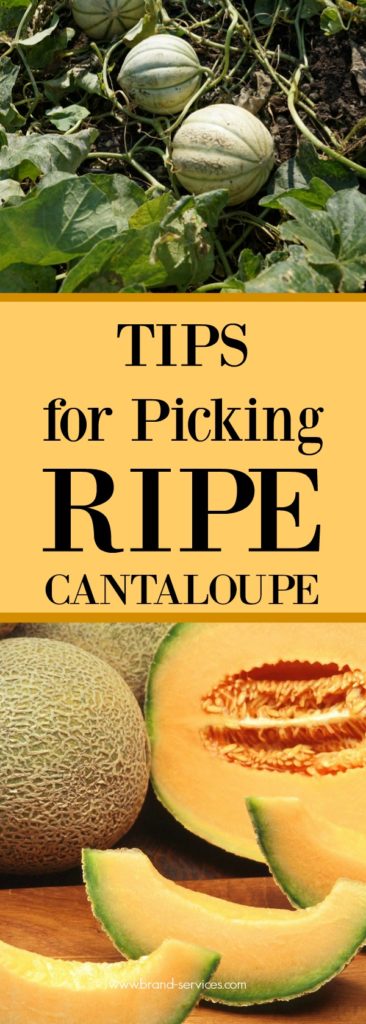
Tips For Picking Ripe Cantaloupe

September 27, 2012 by Becky


If you’re like me, you can use some tips for picking ripe cantaloupe, because it can be hard to tell when it’s ready to eat!

I used to think I didn’t like cantaloupe very much.  And I guess I didn’t really.  My problem was that I was eating bland, dry, flavorless cantaloupe that I bought on sale somewhere.  I learned my lesson and discovered how to choose or pick a cantaloupe that is ripe and ready to eat.  Now when I’m either picking fruit at the store or from my own garden, there are some simple tips to help you spend your money and time wisely.


Follow these simple tips to choose a melon that is ripe and ready to eat.

  1. LOOK – Cantaloupe should be a nice golden yellow color.  Don’t pick cantaloupe that are greenish.  They are not ready!  Don’t worry about rough spots that may be on the outside of your cantaloupe.  They don’t mean anything as to the ripeness.
  2. FEEL – You should be able to feel the edges of the outer skin.  A smooth skin means it is not ripe.  The flower end (the end not attached to the vine) is soft.  You should be able to press it gently in.  If it springs back out after pressing, your cantaloupe is ready.
  3. SMELL – Place that blossom end or the “button” of the cantaloupe just under your nose and take a whiff.  A strong sweet aroma indicates the cantaloupe is ready.  Sometimes you will smell the strong aroma without smelling the button.  If it doesn’t have a scent, don’t pick it or don’t buy it.  It is not sweet.

Now when I eat cantaloupe, it is like a little slice of heaven.  Fresh from my garden, picked right off the vine.  It is heavy, fragrant, so very juicy, and still warm from sitting in the sun in my happy little weed-filled corner of the world.  This is what makes me love to garden.  And what makes me love to eat!

Perfection!

Filed Under: Fruit, Gardening, Tips & How To's Tagged With: Cantaloupe, Fruit, Gardening, melon, ripe fruit, tips

  • « Go to Previous Page
  • Go to page 1
  • Go to page 2
  • Go to page 3

Primary Sidebar

Shopping Cart

Items in Your Cart

Your cart is empty
Visit The Shop

Follow Western Gardens

  • Facebook
  • Instagram
  • Pinterest
  • YouTube

See what we’ve been pinning!

Follow Me on Pinterest
Followed by people.
?

Pinterest Badge by Skipser

Here’s What We’ve Been Up To!

Save water and money by Turf Training - train your lawn to grow deep roots
work at western gardens utah garden center
Senior gardening woman Edu Carvalho from Pexels
nursery center open to public

Copyright © 2025. Western Gardens - Privacy Policy